Built Trust With a Team That Didn't Want Design in the Room
We taped up a rough, incomplete service blueprint outside a room we hadn't been invited into, and flipped a skeptical org into a design partner in three days.
We had a mandate to map and fix the process, but no sponsor to open the door.
Small business lending touched bankers, underwriters, compliance, and half a dozen back-office systems, and no single document showed how those pieces connected. Every group had its own version of the process. None of them matched.
I had a mandate to map it. What I didn't have was an executive sponsor. The consumer org had already worked with design and trusted it. Small business had not, and nothing I brought into their room on my own authority was going to change that.
An executive summit at HQ that week would set direction for the products we were supposed to build, and design wasn't in the room for it. The room we needed to be in wasn't open to us yet, and a polished proposal delivered from outside it would have read as design telling them their own process better than they knew it.
We cobbled together our rough understanding of that world, showed up unannounced, and put it somewhere they would notice.
My team built a skeleton version of the full service blueprint: rough, incomplete, sticky notes and marker on butcher paper. It invited direct feedback in a way a polished deck never could. We rolled it out deliberately in the hallway outside the summit, on the path to the snack room, where the people we needed couldn't avoid walking past it.
People stopped. A banker would see the "Apply" lane and correct a step we'd gotten wrong. An underwriter would add a compliance check we'd missed. Someone from BLA would tag a system dependency nobody on my team knew existed.
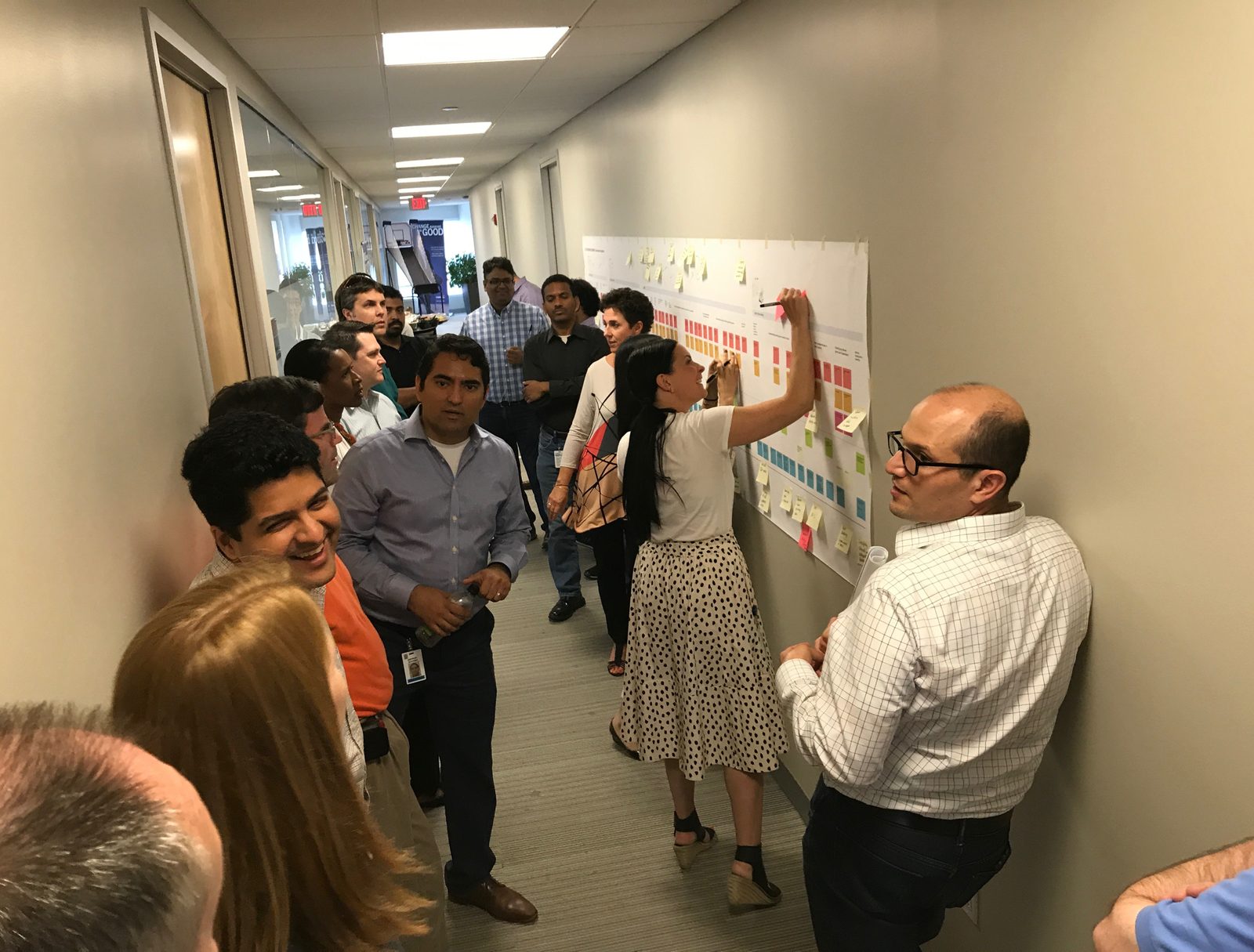
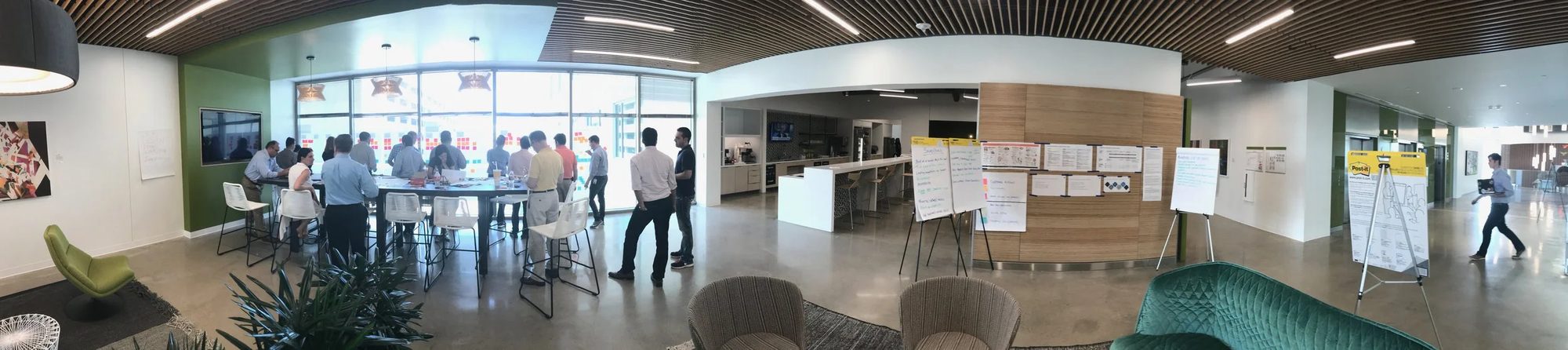
The best find came from two people who didn't know each other. One saw a step where the process ended with information getting faxed to a number, and flagged it as something we'd gotten right but nobody could explain. A while later, someone else walked by, saw the same note, and said part of her job was standing at the fax machine on the other end, shredding whatever came through. Nobody had ever told her what it was for. Nobody used it.
Drawing out the experts with critical pieces of the story was the biggest win on this project. They had a voice, they felt seen, and we got the whole story for everyone to rally around.
By day three of the summit, we were in the room.
Two customer journeys ran on one regulatory floor underneath both.
The current state allowed us to build the future state with a realistic end-to-end map showing two journeys: a low-touch digital path for self-serve applicants and a high-touch relationship path for larger commercial deals. We were able to cleanly see and build for the backstage handoffs between banker, underwriter, and BLA, and the full regulatory backbone running underneath both, ECOA, Reg B, HMDA, KYC/AML, SOX, fair lending, appraisal policy.
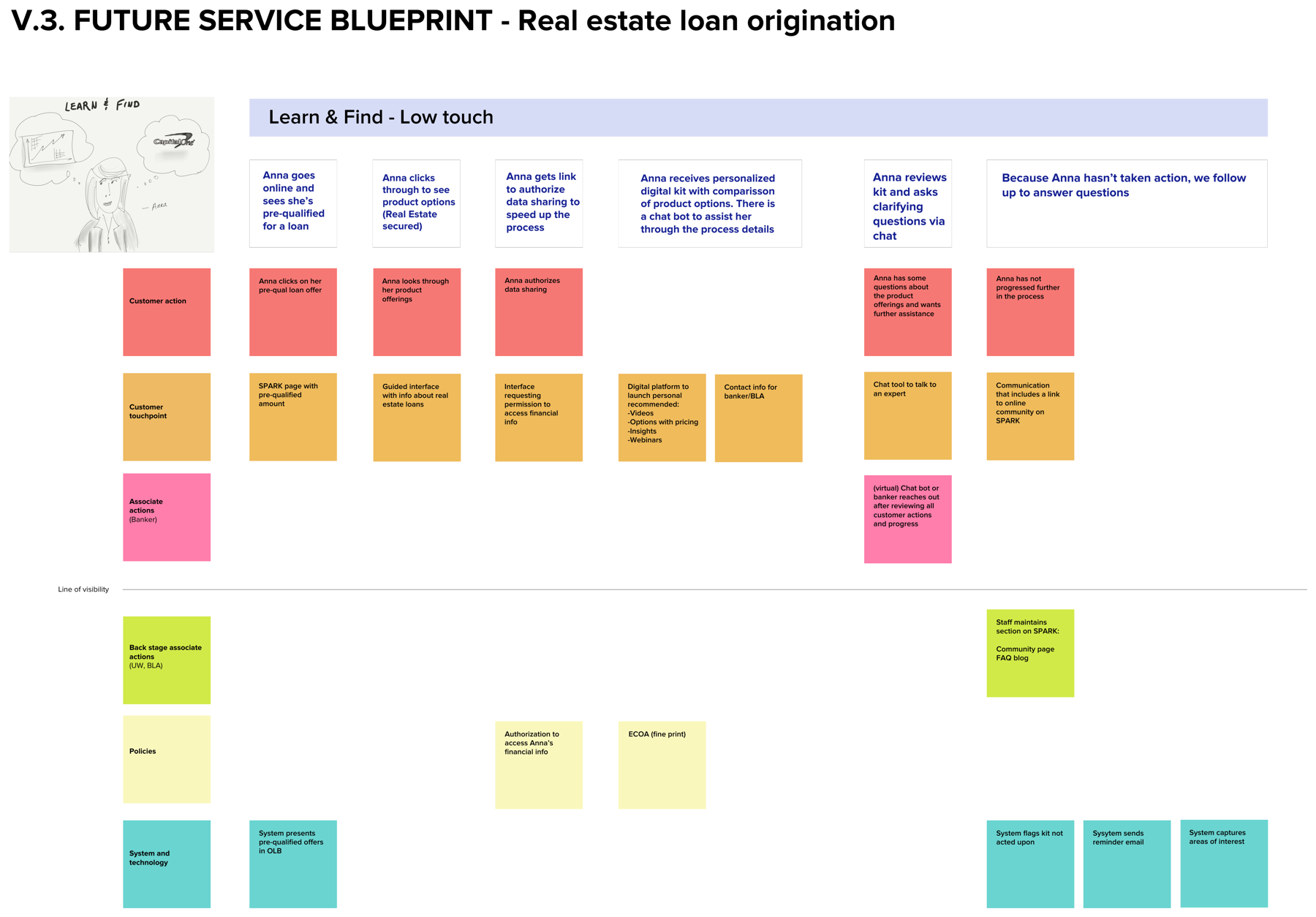
That structure mattered more than either journey on its own. The compliance requirements didn't live off to the side in a document design consulted occasionally, they sat inside the same document everyone else used. They were load-bearing. Every touchpoint in both journeys had to clear the same regulatory bar, whether the customer arrived through a self-serve form or through a banker who'd already pulled their financials.
We could see two distinct journeys because of how we built the map.
The digital path and the relationship path weren't the same experience wearing different UI, and we only saw that clearly because the map was public enough for the right people to keep correcting it in place. What follows is what that process surfaced: two customer journeys that earned trust in completely different ways, mapped in enough detail to build from.
You earn a skeptical org's trust by inviting them to correct you.
Sometimes a small amount of showmanship goes a long way. This worked well, but I would do this bigger and sooner next time.
A group that doesn't trust design yet won't be won over by a pitch, but they'll happily correct your mistakes in a hallway. It's a messy, fun way to get to know your partners, and it gets them genuinely invested in the work before they've even agreed to trust you. By the time the summit ended, they'd built part of it themselves.
I still use this when I need buy-in from a group that doesn't yet trust design. Build something clearly unfinished, put it where the skeptics already are, and let their expertise fill the gaps. People defend what they helped build, even when they didn't ask to build it.